Tulsa, OK · Garage Door Service
Kiefer homes mostly went up around 2004, newer than much of the Tulsa service area. We work on the openers and steel doors that came with that newer stock, from our Tulsa trucks.
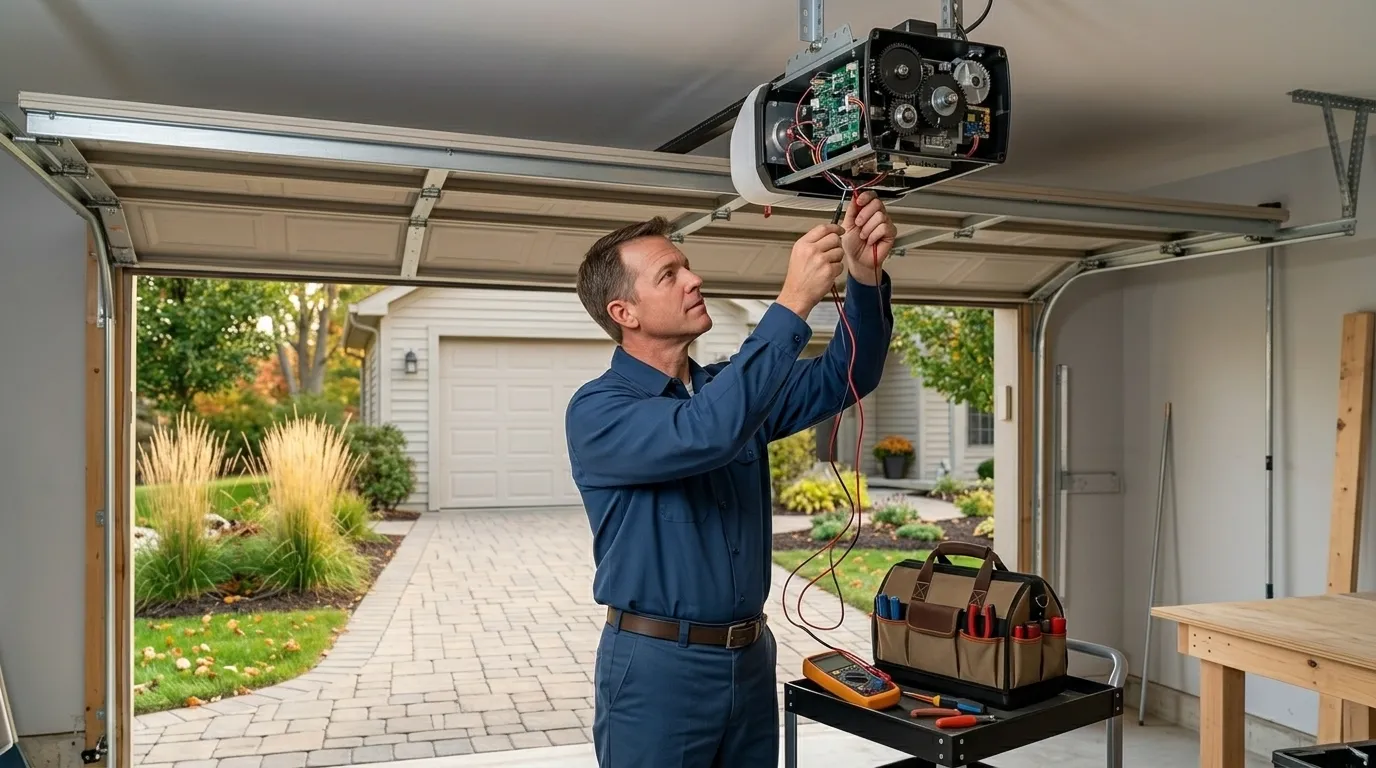
Kiefer's houses cluster around a median build year of 2004, which puts most of this town well past the older stock we see closer to Tulsa, where the wider service area runs from 1973 into the mid-2000s with a median around 1990. That gap matters more than it sounds like it should. A house built in 2004 usually came with a steel sectional door, a chain or belt-drive opener with a photo-eye safety reverse, and torsion springs sized for factory-standard panel weight. You're not dealing with the flat, single-thickness panels or the older side-mounted extension springs that show up on a lot of 1970s and 1980s builds elsewhere in the coverage area. What fails in a Kiefer garage is more likely to be a worn opener drive gear, a photo-eye knocked out of alignment, or a torsion spring that's simply reached the end of its cycle count after two decades of daily use. It's wear-and-tear on a system that was built to a decent code standard when it went in, not a fight against outdated hardware. That's a different repair conversation than the one we have on older doors, and it usually means parts are easier to source because the door and opener generation is more common.
With roughly 807 households in Kiefer, the calls we get tend to repeat: an opener that runs but won't fully close, a spring that let go with the loud bang homeowners always describe the same way, or a remote that stopped talking to the unit. Median household income here runs around $81,402, higher than the roughly $72,137 median across the broader service area, and that shows up in the kind of doors we're asked to work on - more insulated steel doors, more openers with battery backup, fewer bare single-layer panels. We also get the practical calls: a track knocked out of alignment after someone backed into it, or a cable that frayed and needs replacing before it snaps under tension. One honest note - if a spring has already broken and the door is down, we don't recommend forcing it open or closed yourself. Torsion springs under load can cause real injury, and it's a same-visit fix once we're on site with the right bar and clamps.
Kiefer sits about 15 miles from Tulsa, on the newer end of the build-year range for this whole service area. Where a lot of the 18 named communities we cover mix in older 1980s and 90s stock, Kiefer's housing leans toward construction from the early 2000s, which generally means better wall bracing at the header, factory-set door tracks, and openers with the safety features that became standard around that time. The climate here is still the same cold-moderate band that affects every door in this region - temperature swings that tighten steel and stiffen lubricant in an opener's gear housing over a winter, then loosen everything back up by spring. Newer construction doesn't exempt a door from that cycle, it just means the hardware fighting it is a generation younger. What we don't see much of in Kiefer are the wood-panel doors or the un-reinforced single-thickness steel doors that are common on older builds elsewhere in the coverage area, and that's worth knowing if you're pricing a repair versus a full replacement.
We run out of Tulsa, about 15 miles from Kiefer, and we don't keep a depot or crew stationed in town. That distance is real and we won't pretend otherwise - a same-day call depends on the truck schedule that day, not a promise we can make up front. What we can tell you is that a 2004-era opener and steel door are common enough hardware that we're not guessing on parts when we get there. If your situation is a full door that won't move and it's blocking a vehicle, say so when you call so it can be weighed against the rest of the day's route.
Generally yes. Kiefer's housing stock centers on a median build year around 2004, later than much of the broader service area. That usually means steel sectional doors with torsion springs sized to code and openers with photo-eye safety reverses, rather than the older extension-spring or flat-panel doors common on 1970s-80s builds elsewhere.
No. We run out of Tulsa, roughly 15 miles away, and travel to Kiefer as calls come in. We don't keep a depot or stationed truck in town, so timing depends on the day's route rather than a fixed response window.
Broken torsion springs and opener issues top the list - a drive gear wearing out, a photo-eye knocked out of alignment, or a remote that's stopped syncing. These match what you'd expect from openers and doors installed in the early-to-mid 2000s reaching the end of their normal service life.
Depends on the door's age and what's actually broken. Given Kiefer's newer housing stock, most doors and openers we see are still within a reasonable repair window rather than needing full replacement, but a cracked panel or a badly rusted track on an otherwise sound door is a case-by-case call we make on site.
Call now or request a free quote - same-day service on most repairs, upfront written pricing.