Tulsa, OK · Garage Door Service
Tulsa Garage Door Co fixes broken springs, off-track doors, and dead openers in homes built 1973-2005 across Tulsa's cold-moderate climate zone, near Catoosa.
Most of the houses we get called to across this service area went up between 1973 and 2005, with the typical build year sitting right around 1990. That means a lot of doors and openers out there are original equipment or a first replacement from the 90s - steel sectional doors on torsion springs rated for a lifespan that's long since passed. Tulsa sits in a cold moderate climate band, which is harder on hardware than people assume. The metal contracts in a hard January freeze, grease inside bearings and rollers stiffens up, and the same springs get asked to lift a door through a much wider temperature swing than they were built for. Add 25-35 years of daily cycles and you get the failure pattern we see over and over: springs that finally let go on the coldest morning of the year, because that's when the steel is least forgiving. Across the 18 named areas that make up this stock, from the older postwar pockets to the 90s-built subdivisions, the pattern repeats. It's not bad luck. It's a door built for 1990 conditions doing 2024 work.
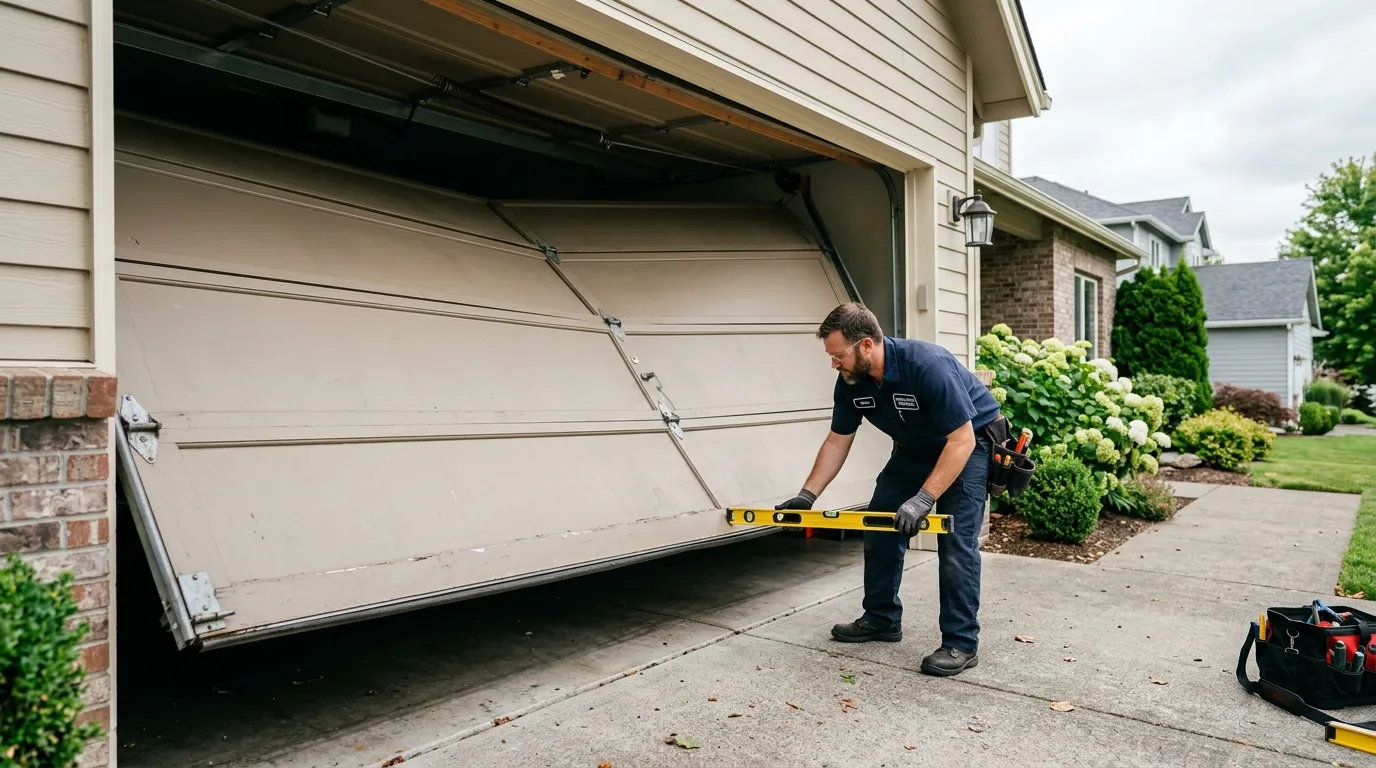
A broken spring or a snapped cable doesn't wait for a convenient day, and in a cold moderate climate that matters more than it would somewhere mild - an open or stuck-shut garage door in January isn't just inconvenient, it's a heat loss problem for the whole attached wall. Most of the jobs we see fall into two buckets: the door won't move at all because a spring or cable let go, or it moves but comes off track because a roller or hinge failed first and the door racked sideways in the opening. Either way, you're not driving the car out until someone with the right bars and a winding tool has the door back on its springs safely. We don't quote a blanket turnaround here because it depends on what's actually broken and what's on the truck versus what has to be ordered - a standard torsion spring is usually stock, but some opener boards and certain track hardware for older doors are not, and that's the honest limitation: if your door is original to a 1970s or 80s build, matching parts sometimes takes longer than the repair itself.
If your house falls in that 1973-2005 build range, the failure usually looks like one of a few things. A loud bang followed by a door that won't budge, or budges an inch and stops - that's a torsion spring letting go, and on the older single-spring setups common in 80s and 90s construction, one spring means the whole door is dead until it's replaced. A door that opens crooked or drags one corner is usually a snapped cable or a bent track, often from a roller that seized up over a cold winter and finally wore through. Openers from that era are a different story: chain-drive units with worn drive gears or aging circuit boards that trip breakers or run the motor without moving the door. And on doors that are wood or older steel from the earlier end of that build window, panel rot or rust along the bottom section shows up as a door that binds or won't seal, which is a symptom of age more than any single part failing. None of these get better sitting.
We don't post a flat price here because a broken spring on a single door and a full opener swap on a double door aren't the same job, and the parts available for a door from 1975 aren't priced like parts for one from 2005. What we can tell you is how the area shapes the decision: median household income across this service area runs $72,137, and among the roughly 59,310 households here, 37,589 are owner-occupied houses - most of them the ones carrying original or first-replacement hardware. For a lot of these owners, a spring repair is a clear yes and a full door replacement is a harder call, especially on a door that's otherwise sound. Our honest read: if the panels are solid and it's springs, cables, or rollers, repair almost always makes more sense than replacement. If the door itself is rusted through or the panels are cracked from age, we'll say so rather than patch something that's going to fail again in a year.
Steel springs get stiffer and more brittle as temperatures drop, and Tulsa's cold moderate climate means real freezes most winters. A spring that's already near the end of its cycle life is far more likely to snap on a cold morning than a mild one, since the metal has less give left in it right when it's being asked to do the most work.
Likely, yes. A lot of the housing stock in this area went up in the 1980s and 90s, and openers from that period are chain-drive units with mechanical parts and circuit boards well past their expected working life. Worn gears and aging boards are the most common cause of an opener that runs the motor but doesn't move the door.
We'd advise against it. A torsion spring is under enough tension to cause serious injury if it's wound or released without the right bars and technique. It's one of the few repairs on a garage door that's genuinely not a safe DIY job, regardless of how simple it looks.
Call now or request a free quote - same-day service on most repairs, upfront written pricing.