Tulsa, OK · Garage Door Service
Bixby homes mostly went up after 2000, later than most of the Tulsa service area. We travel 13 miles out to fix the springs, openers, and tracks that era uses.
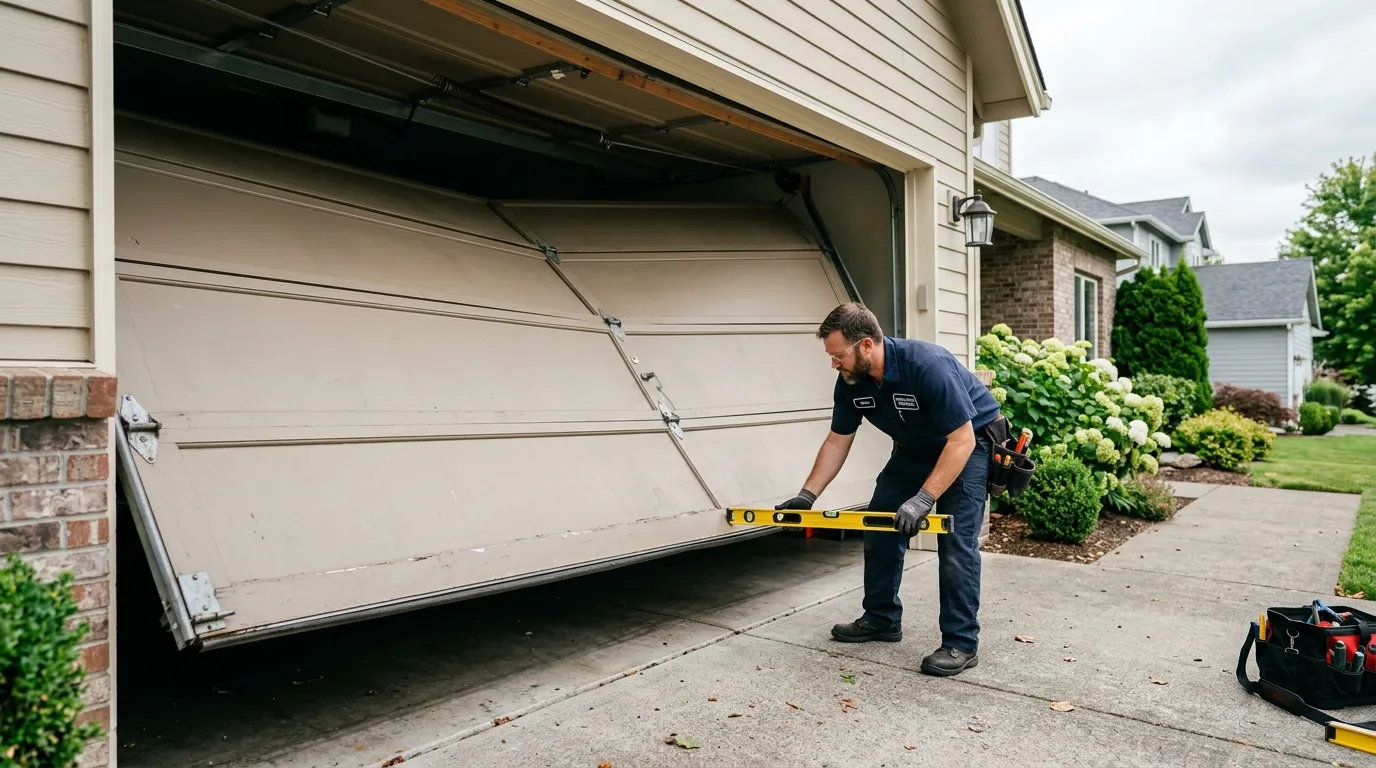
Most houses in Bixby went up after the year 2000, which puts this suburb noticeably newer than a lot of the ground we cover around Tulsa, where the typical house dates closer to 1990. That gap matters on a garage door call. A door installed after 2000 almost always came with a steel torsion spring on a center-mounted shaft and a chain or belt-drive opener with a photo-eye safety sensor pair, not the older extension-spring setups you still find on 1970s and 1980s stock elsewhere in the service area. The failure points are different too. On newer doors we see nylon rollers that have worn out their bearings, opener logic boards that have taken a lightning surge, and photo-eye brackets that got bumped out of alignment during a move or a kid's basketball game. We also see torsion springs failing on schedule - most are rated for a set number of open-close cycles, and a door that's fifteen to twenty years old is getting into that window now. Add in the cold-moderate winters this part of Oklahoma gets, and steel hardware that's flexed through repeated freeze-thaw cycles for two decades starts showing it: stiff cables, gritted-up track, springs that lost tension faster than they should have. None of this is exotic. It's just what a newer torsion-spring door does as it ages, and it's what we come prepared for on every call out to Bixby.
We diagnose on site before we quote anything. For a torsion spring failure - the most common reason a door in this age bracket won't open - we match the spring to the door's weight and wind it to the correct number of turns, not a generic count. For opener trouble, we check the logic board, the photo-eye alignment, and the drive belt or chain tension before we recommend a swap; a lot of "dead opener" calls turn out to be a knocked-loose sensor bracket, which is a five-minute fix, not a new opener. Track and roller wear gets handled the same way: we look at whether the track is bent or just dirty, and whether the rollers need lubrication or full replacement. We carry common spring sizes and standard hardware on the truck, since we're driving in from Tulsa and a second trip costs everyone time. What we don't do is sell a full door replacement when a repair will hold - we'll tell you straight if your door is past the point where fixing it makes sense, but we don't push new units on doors that have another decade in them.
We're based in Tulsa and drive out to Bixby for calls, roughly 13 miles each way, so we schedule the visit rather than promising a same-hour arrival - we'll give you a window when you call. Tell us the door's approximate age and what it's doing (won't open, opens partway, makes noise, opener runs but door doesn't move) and we can usually tell you what to expect before the truck leaves. Book through the Bixby garage door repair page or call directly.
A torsion spring holds enough stored tension to break a wrist or worse if it lets go while you're working on it - that's not a job to learn on your own driveway. Lubricating rollers, tightening loose hinge bolts, and clearing track debris are all fine to do yourself and won't void anything. Realigning a photo-eye sensor is usually safe too, since it's low voltage and no stored tension is involved. Where we draw the line is anything involving the spring, the cable, or the torsion shaft - if the door is stuck shut because a spring snapped, leave it shut and call rather than trying to force the opener to muscle through it, which usually burns out the motor.
We don't have a published price list to quote here, and giving you a number without seeing the door would be a guess dressed up as a fact. What we can tell you is what drives the cost on a typical Bixby call: whether it's one spring or a matched pair (doors this size usually run two), whether the opener needs a board or a full unit, and whether rollers and cable need replacing alongside the spring rather than on their own. We'll give you a firm number after we've looked at the door, before any work starts.
The most common bad outcome we see isn't a failed repair, it's a delayed one. A door that's binding or making noise and gets ignored usually ends with the opener motor burning out from fighting a spring that's already half-gone, which turns a spring job into a spring-plus-opener job. Cables can fray and snap without warning if a spring failed months earlier and nobody noticed the door running unevenly. And on the newer stock common in Bixby, a misaligned photo-eye sensor left unfixed sometimes gets "solved" by unplugging the safety feature altogether - which is a real risk with kids or pets around the garage. If a spring has already let go, the honest move is to stop using the opener, leave the door where it sits, and call rather than working around it.
Because it was built after 2000. Torsion springs on a center shaft became the standard setup for garage doors from that era on, replacing the older side-mounted extension springs common on 1970s and 1980s houses elsewhere in the area. It's a stronger, more even lift, but it fails differently and needs different hardware on repair.
No, we run out of Tulsa and drive to Bixby for calls, about 13 miles each way. We schedule a visit window rather than promising an on-the-spot arrival, since we're coming from out of town.
Springs are rated by cycle count, not age, but a door installed right around 2001 is now old enough that a lot of original springs in this area are reaching or past their expected cycle life. If yours is original and you haven't had it serviced, that's worth checking.
Usually not, for a door built in the last two decades - the panels, track, and frame on a house this age are typically still sound, and it's the spring, opener, or rollers that wear out first. We'll tell you if we find rot, rust, or frame damage that changes that math, but that's not the common case here.
Call or request a quote - tell us what your door is doing and where you are.