Tulsa, OK · Garage Door Service
Worn rollers on Tulsa homes built between 1973 and 2005 wear out from cold-to-hot swings. Here's why it happens, what it looks like, and what the job runs.
Most of the houses we get roller calls from went up between 1973 and 2005, with the bulk of the stock dating to the 1980s and 90s across the 18 or so named areas we run trucks through. Doors from that era almost always shipped with steel rollers, sometimes nylon if a builder upgraded, and neither one was built to last 40-plus years of daily cycles.
Tulsa's climate is the other half of it. We sit in a cold-moderate band, which means the metal track and the roller stem go through real temperature swings across a year - not brutal, but enough that the grease inside a roller sleeve thins out in summer and stiffens in winter. That expansion and contraction works the roller's bearing loose faster than it would in a milder climate. Add 30-plus years of a two-car door cycling twice a day and you get flat spots on the roller wheel, a dry bearing that squeals, or a stem that's worn enough to let the roller walk out of the track.
This isn't a defect in how the door was built. It's just what happens to 1980s and 90s hardware that's been doing its job for three decades in a place with real seasons.
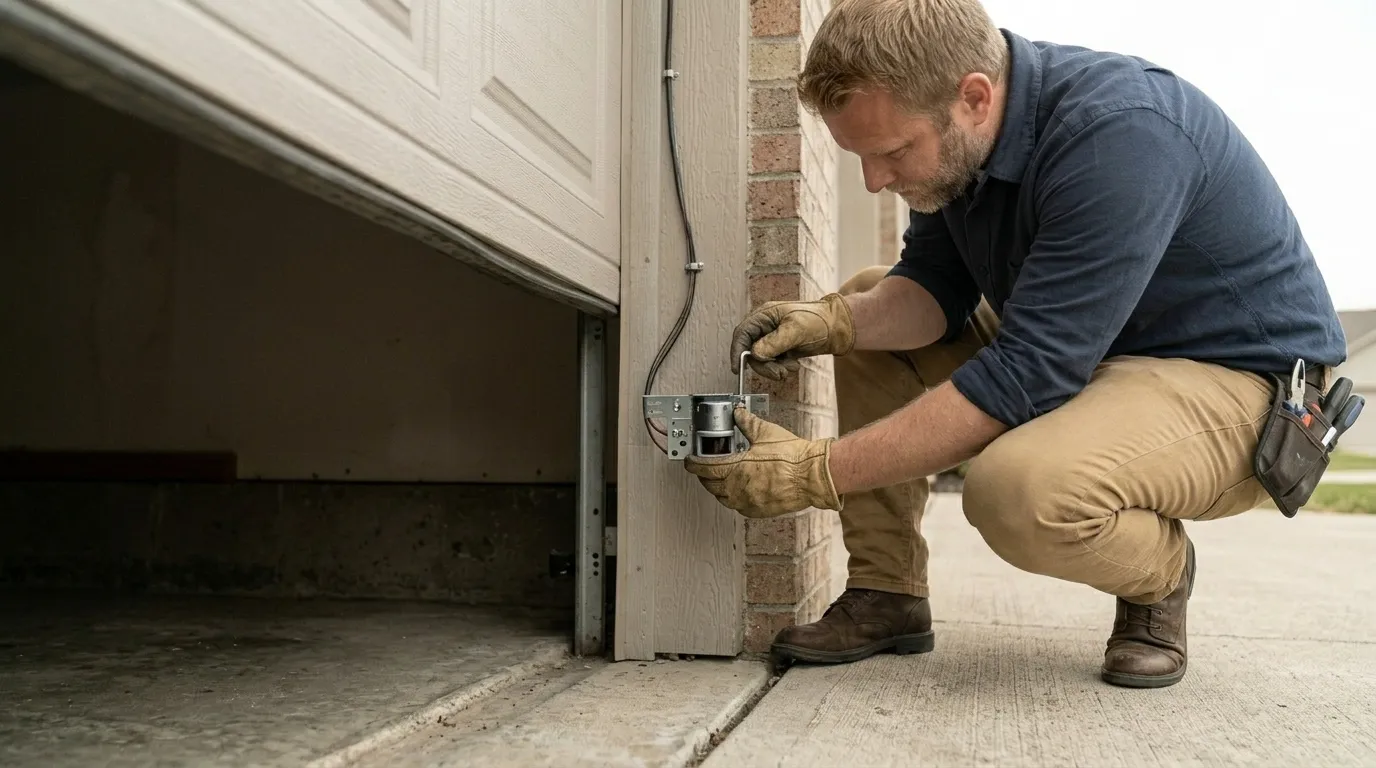
A straight roller swap on one door, done from a service call already in progress, doesn't leave you without a working door for any real stretch of time - the door comes off the track section by section, one side at a time, so you're never staring at an open bay. If every roller on both tracks needs replacing and the track itself is bent or rusted from age, that's a longer job, but it's still handled panel by panel so the opener and the door stay usable between steps whenever possible.
Where it gets slower is parts. Standard steel and nylon rollers are stock items we carry on the truck. Sealed or oversized rollers for a heavier insulated door aren't always something we're carrying that day, and if yours calls for a less common size, that can push the job to a second visit. We'll tell you on-site which case you're in before we start, not after.
The most common complaint is noise - a grinding or squealing sound as the door travels, usually worse at the top or bottom of the run where the roller takes the most load. A close second is a door that shudders or jumps slightly as it moves, which usually means one or more rollers have a flat spot and aren't rolling smooth through the track anymore.
If you look at the track itself and see a shiny groove worn into one section, or a roller that looks angled instead of sitting flush in its stem, that's wear talking. In houses from the 1980s and 90s stock common across this area, we also see the roller bracket itself rusted or bent from age, which changes the fix from a roller swap to a bracket-and-roller job.
What you don't usually see with a roller problem, and this matters, is the door refusing to move at all. If the door won't budge, that's more often a spring or opener issue, not the rollers - worth knowing before you assume it's the same fix.
What drives the price on a roller job is how many rollers need replacing, whether it's steel or sealed nylon, and whether the track or roller brackets are also worn enough to need attention. A single-roller fix on an otherwise sound door is the smallest version of this job. A full set on both tracks, especially if the brackets are rusted from age like we see on a lot of the 1980s and 90s housing stock in this area, runs more.
We won't quote a number here because it genuinely depends on what we find when we're standing at your door - and we'd rather tell you straight than throw out a figure that doesn't hold up on-site. What we can tell you: if your track is also bent, replacing rollers without fixing the track wastes your money, because the new rollers will wear the same way inside a week. We'll flag that before doing the smaller job alone.
Rollers usually announce themselves with noise - grinding or squealing as the door moves - and sometimes a shudder or jump partway through the travel. If the door won't move at all, or feels heavy the second you try to lift it by hand, that's almost always a spring problem, not a roller one.
You can, but the rollers sit under spring tension when the door's closed, and getting one out without dropping the section on your hand takes more care than it looks like. If your house is on 1980s or 90s original hardware, the bracket underneath is often rusted too, which isn't a DIY fix.
Nylon runs quieter and doesn't need grease the way steel does, which matters given our cold-to-hot swings drying out lubricant faster than in a milder climate. It costs more upfront. For a door you use daily, most owners find the quiet worth the difference.
We'll replace what's actually worn. If only two rollers on one side show flat spots, we're not going to sell you a full set. If the rest are close behind on wear, we'll tell you that too, so you can decide whether to do it now or wait.
Call or request a quote - tell us what your door is doing and where you are.