Tulsa, OK · Garage Door Service
Garage door repair and service for Sapulpa homes, most built around 1976 - older spring and track hardware that needs different parts than newer Tulsa-area builds.
Most of the calls we get from Sapulpa start the same way: a door that worked fine yesterday and won't budge today, and a homeowner standing in the driveway with a wrench wondering how bad this really is. The honest answer depends a lot on when the house was built.
Sapulpa's housing stock centers on 1976, well ahead of the 1990 median for the wider service area we cover out of Tulsa. That gap matters more than it sounds like it should. A door from the mid-1970s is more likely to run on an older extension-spring setup mounted along the horizontal track, rather than the torsion spring over the header that became standard on newer builds. Extension springs are simpler to look at but nastier to work on - they store energy along their length, not in a wound coil, and a DIY spring swap on one goes wrong differently than it does on newer hardware.
What you can safely handle yourself: tightening loose hardware, lubricating hinges and rollers, clearing the track of debris, checking that the photo-eye sensors are aligned. What you shouldn't: anything involving the spring itself, the cable that's under tension, or a bent track that's holding weight. If the door won't move and you can see a gap in a coiled spring, stop and call. That's not a job for a Saturday afternoon.
A door built around 1976 has had roughly five decades of Oklahoma weather working on it, and our climate band here is cold-moderate - enough freeze-thaw cycling and temperature swing over a winter to stiffen old grease, shrink weatherstripping, and make steel panels contract and expand at the seams. On a newer door with better seals and lighter-gauge modern hardware, that cycling barely registers. On a door that's a decade or two closer to fifty years old, it shows up as a track that binds in January and a spring that finally lets go in February.
The other piece is what got installed in the first place. Homes built in the 1970s often went up with lighter steel sections and simpler roller hardware than what's standard now, and over enough seasons those original parts wear past what a spray of lubricant fixes. We see a fair number of Sapulpa jobs where the fault isn't one broken part - it's several parts that are all near end of life at once, because they all went in the same year.
We're not saying every Sapulpa garage door is falling apart. Plenty have had openers or springs replaced along the way. But when a house is close to fifty years old, the base hardware underneath those replacements is often still the original track and drum, and that's usually where the actual fault traces back to.
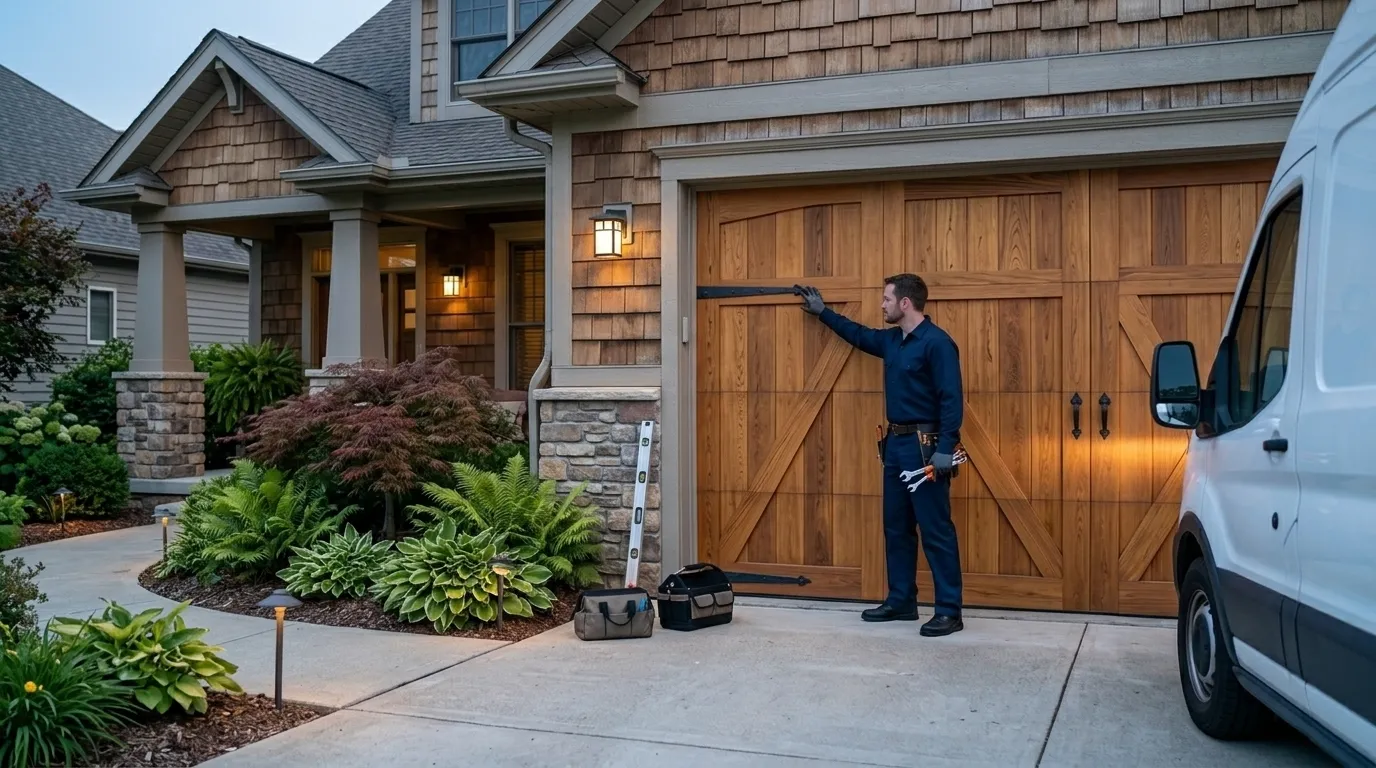
The truck carries parts sized for both the newer torsion setups and the older extension-spring hardware still common on houses from the mid-1970s, since a lot of the Sapulpa jobs we run are on that older side of the housing stock. That covers standard extension springs, replacement rollers and hinges, cable, and the openers that fit older headers without a full frame rebuild.
Here's the limit, plainly: some original hardware from that era is no longer made, and if a specific bracket or drum has been discontinued, the fix isn't a matching part - it's an upgrade to current hardware that does the same job. We'll tell you when that's the case rather than quote a repair that can't actually happen. On a door that old, sometimes replacing the whole assembly costs less in the long run than chasing parts for a track system nobody manufactures anymore.
We also stock the basics that don't care what decade the door is from - weatherstrip kits, photo-eye sensors, standard remotes - because those fail on new and old doors alike, cold-moderate climate or not. If you're not sure what your door has, a call gets it identified before the truck rolls.
We run out of Tulsa, and Sapulpa sits about 15 miles out on that route, which puts it toward the farther end of the area we cover rather than the close-in stops. There's no separate branch here - the same truck and the same stocked parts that serve the rest of the service area come out to Sapulpa on scheduled calls.
With around 8,960 households in Sapulpa and a median income near $61,644, a fair number of the jobs here land on the repair side of the line rather than full replacement, and we'll tell you honestly which one makes sense for your door rather than pushing the bigger job by default. Book through the Sapulpa page linked below, and if what you actually need is a broader look at everything the company handles across the Tulsa area, that's covered on the main service page.
No. We run out of Tulsa and cover Sapulpa as part of that service area, about 15 miles out. There's no local branch - the truck comes out on scheduled calls with the same stocked parts used across the rest of the area.
Sapulpa's homes center on a 1976 build year, ahead of the service area's overall median. Houses from that era more often run extension springs and older track hardware rather than the torsion systems standard on newer builds, so the parts and the repair differ.
Depends on the door. If the track and drum are original from a mid-1970s build and a needed part is discontinued, replacement can cost less than chasing obsolete hardware. If it's a newer door with an old spring, repair usually makes more sense. We'll tell you which applies once we've looked at it.
Lubricating hinges and rollers, tightening visible loose hardware, clearing track debris, and checking that photo-eye sensors are aligned and not blocked. Anything involving the spring under tension or a bent track holding weight isn't a DIY job - call for that.
Call or request a quote - tell us what your door is doing and where you are.